Route 66
The first interstate, connecting Chicago to Los Angeles

Route 66
The first interstate, connecting Chicago to Los Angeles
Route 66 is a historic U.S. highway that stretched 2,448 miles from Chicago to Santa Monica, symbolizing American mobility, freedom, and roadside culture.
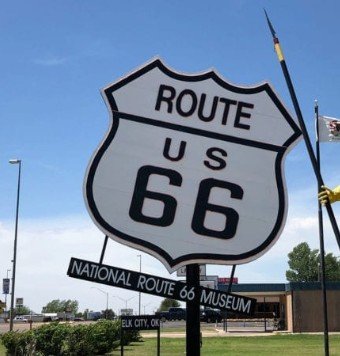
Route 66, often called “The Mother Road,” is one of the most iconic highways in American history. Established in 1926, it originally stretched 2,448 miles from Chicago, Illinois to Santa Monica, California, cutting diagonally across eight states and serving as a vital artery for migration, commerce, and adventure. More than just a transportation route, Route 66 became a symbol of freedom and possibility, especially during the Dust Bowl and Great Depression, when thousands of families traveled west in search of a better life. Its path connected rural towns to major cities, fostering economic growth and cultural exchange along its winding course.
Throughout the mid-20th century, Route 66 flourished as a hub of roadside Americana. Travelers encountered neon-lit motels, quirky diners, gas stations, and attractions that defined the golden age of road trips. It was immortalized in literature by John Steinbeck, celebrated in song by Nat King Cole, and featured in countless films and TV shows. Though officially decommissioned in 1985, Route 66 lives on through preservation efforts and tourism, with many segments designated as “Historic Route 66.” Today, it remains a nostalgic pilgrimage for those seeking to experience the spirit of the open road and the enduring charm of small-town America.
More than pavement and signs, Route 66 represents a cultural legacy—a thread that weaves together stories of migration, innovation, and resilience. It’s a living museum of 20th-century American life, where travelers can still “get their kicks” while exploring the landscapes, legends, and lore that shaped the nation. Whether you’re chasing sunsets in the Southwest or sipping coffee in a Midwestern diner, Route 66 offers a timeless journey through the heart of the American experience.
Origins
Route 66 was officially established on November 11, 1926 as part of the original U.S. Highway System. It connected Chicago, Illinois to Santa Monica, California, spanning about 2,448 miles across eight states. This founding date marks the beginning of its role as “The Mother Road,” linking the Midwest to the Pacific and shaping American travel culture.
Name Story
The name “Route 66” comes directly from the U.S. Highway numbering system established in 1926. It was chosen as part of the standardized grid of highway numbers, where even numbers generally ran east–west and odd numbers ran north–south.
P.S. If you’re heading west, roll down the windows before you hit the Mojave. Trust me on this one.
P.P.S. If you see a diner with neon lights still working — pull over. They're family to me.